Calculate your result
Use figures from the same period and currency. Avoid mixing estimates with verified amounts without noting the difference.
Privacy: This calculation runs in your browser. The figures you enter are not submitted to our server.
Why this matters
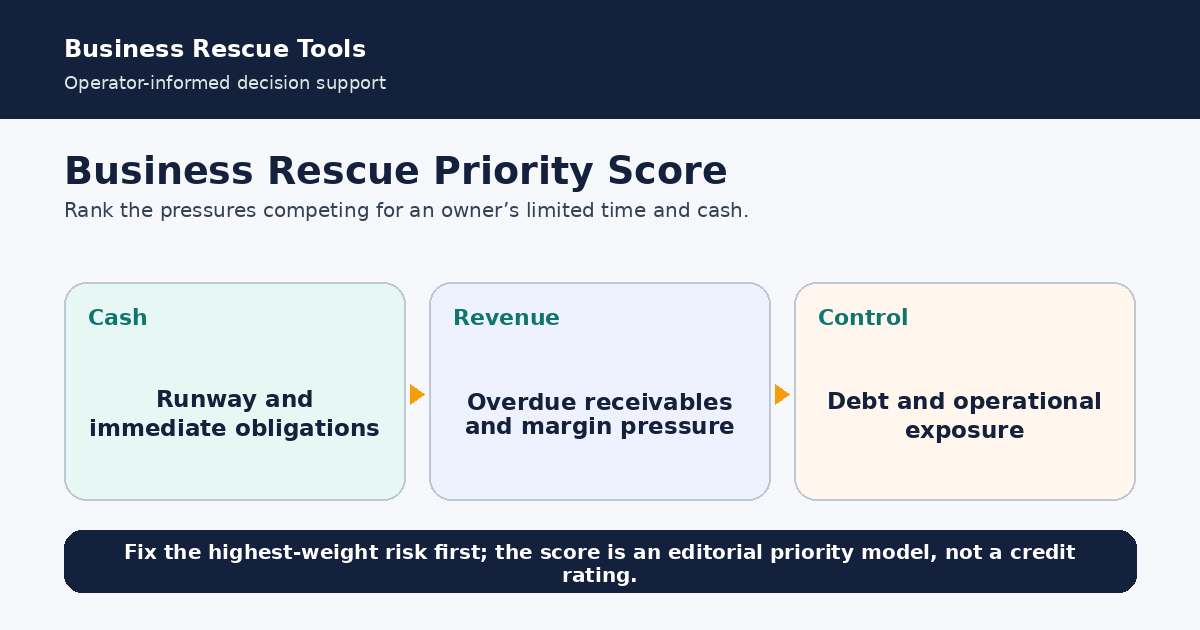
When several problems hit at once, owners often attack the loudest complaint instead of the issue most likely to destroy cash or control. A weighted score creates a disciplined first-pass triage. This calculator focuses management on which combination of runway, overdue receivables, margin pressure, debt burden and unresolved control failures deserves the first management response. The answer is useful because it turns a general cash concern into a quantified decision with a time window, owner and next step.
Use cash runway calculations, receivable aging, current gross-margin reports, debt schedules and a written log of shortages, unsupported transfers or control exceptions. Keep every figure in the same currency and planning period. Separate confirmed cash from hoped-for sales, and label estimates so they are not mistaken for verified balances. Cash-flow guidance should be read as an operating forecast, not a statement of profit. The central discipline is timing: cash must be available before an obligation becomes due.
How to act on the result
- Verify the highest-scoring input before acting because one incorrect percentage can distort the ranking
- Choose one corrective action that can produce measurable improvement within seven days
- Recalculate after the action instead of treating the original score as permanent
Stress-test the result by changing the most uncertain input. A responsible decision should survive a slower collection case, a cost overrun or a delayed receipt. Recalculate when new evidence arrives instead of allowing an old output to become a permanent forecast.
Common mistakes and limits
Watch for using estimates from different periods, understating unresolved control issues, or assuming the score predicts insolvency, creditworthiness or business value. This calculator does not prepare a GAAP or IFRS cash-flow statement, predict insolvency or establish that financing is affordable. It is a management diagnostic built from the figures entered. A critical score combined with unpaid statutory obligations, repeated shortages or less than one month of runway requires professional review, not only an online score.
What this calculator answers
Which business pressure should you fix first?
Formula and assumptions
Score = runway (0–30) + overdue receivables (0–25) + margin pressure (0–20) + debt pressure (0–15) + unresolved control issues (0–10).
- Cash runway: up to 30 points
- Overdue receivables: up to 25 points
- Margin pressure: up to 20 points
- Debt pressure: up to 15 points
- Unresolved control issues: up to 10 points
The result is an estimate. It is only as reliable as the inputs, and it does not account for every tax, legal, financing or operational consequence.
Worked example
Example: The sample business has 1.5 months of runway, 35% of receivables overdue, an 18% gross margin, debt payments equal to 28% of monthly cash inflow, and three unresolved control issues. The model assigns 20 runway points, 17.5 receivables points, 7 margin points, 8.4 debt points and 6 control points. The total is 58.9 out of 100, rounded to 59, which indicates high rescue priority.
How to interpret the result
- Low: no immediate gap or the entered position is comparatively protected.
- Medium: manageable pressure exists, but it should receive a dated correction plan.
- High: the problem can materially damage cash or operations and requires near-term action.
- Critical: the entered assumptions indicate immediate loss, shortage or survival risk.
Authoritative references
These references explain relevant accounting, cash-flow, legal or control concepts. Business Rescue Tools remains responsible for the calculator formula, assumptions and editorial thresholds.
Frequently asked questions
Is this a credit score or insolvency test?
No. It is a transparent editorial prioritization model designed to help an owner decide where to investigate first.
Why does cash runway receive up to 30 points?
Very short runway can remove the time needed to correct other problems. The weighting intentionally gives immediate cash survival the largest single share.
How often should I recalculate the score?
Recalculate weekly during a cash crisis or major turnaround and monthly when the business is stable. Use figures from the same reporting period each time.
What should I fix first?
Start with the component generating the most points, unless payroll, legal obligations, customer funds or safety issues create a more urgent consequence.